
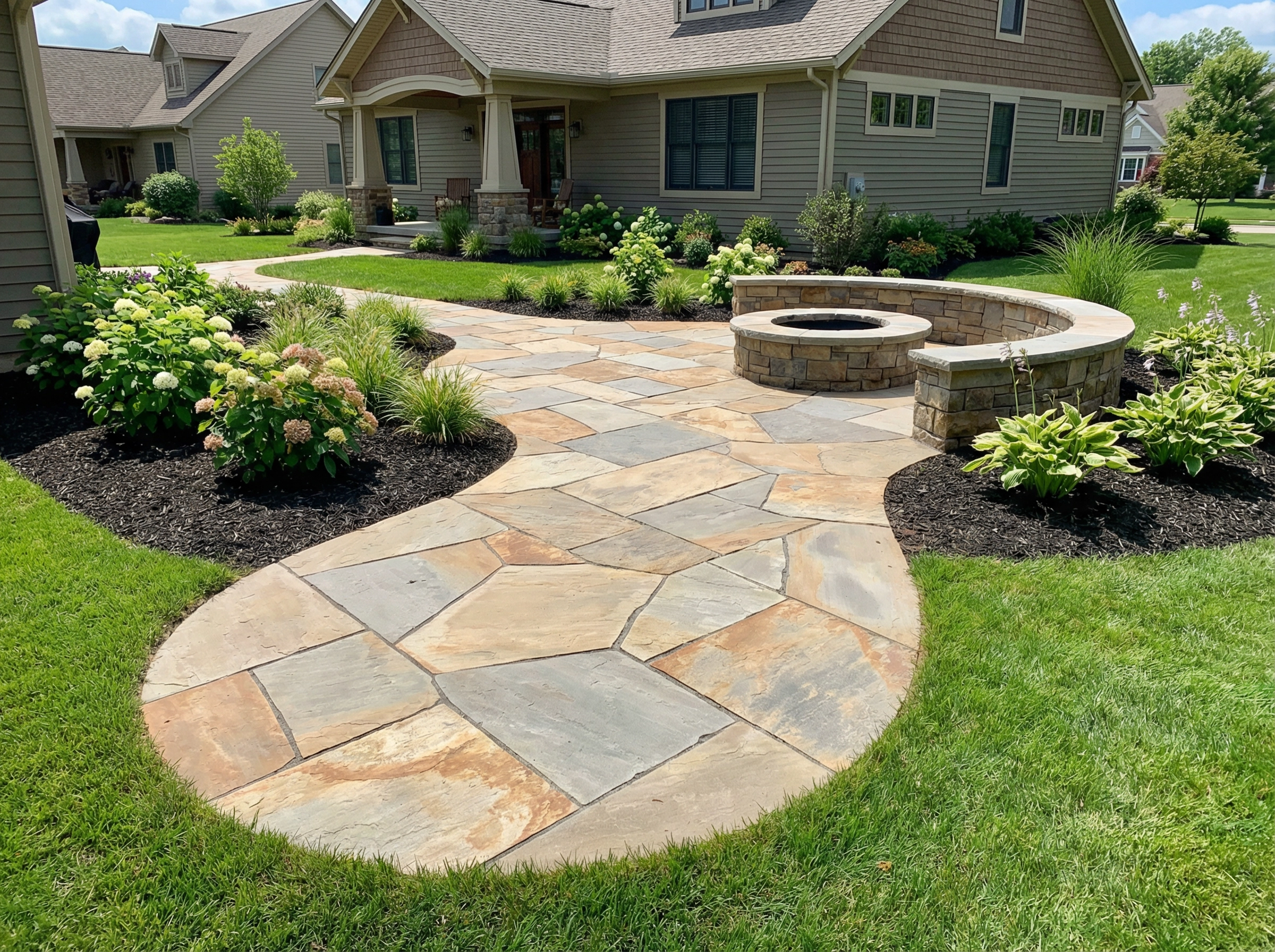
Hardscaping — the non-plant elements of your landscape — provides the structure and function that makes an outdoor space truly livable. Patios, retaining walls, walkways, and steps define how you move through and use your yard. Done well, they also dramatically increase your property's value and curb appeal.
Here's what you need to know about the most common hardscaping projects in Ohio.
Patios
A patio is the foundation of outdoor living. The right material, size, and placement transforms a yard into an extension of your home.
Material Options
- Concrete pavers are the most popular choice for Ohio patios. They're durable, available in a wide range of colors and textures, and individual pavers can be replaced if damaged. They handle Ohio's freeze-thaw cycles well when properly installed on an adequate base.
- Natural stone (bluestone, limestone, flagstone) provides a premium look and feel. It's more expensive than concrete pavers but extremely durable and ages beautifully.
- Poured concrete is cost-effective but prone to cracking in Ohio's climate without proper reinforcement and expansion joints. Stamped concrete can mimic the look of pavers or stone at a lower cost.
Sizing and Placement
The most common mistake in patio design is building too small. A patio that comfortably seats your household plus guests for outdoor dining typically needs to be at least 12x16 feet. Account for furniture clearance — chairs need room to pull out, and traffic paths need to remain clear.
Retaining Walls
Retaining walls solve grade problems and create usable space on sloped lots. They also add significant visual interest to otherwise flat or featureless landscapes.
When You Need One
Any slope steeper than 3:1 (three feet of run for every one foot of rise) benefits from a retaining wall. Steeper slopes are prone to erosion, difficult to mow, and can't support planting beds without significant soil loss.
Material Choices
- Segmental retaining wall blocks are the most common choice for residential applications. They're engineered for structural integrity, available in many styles, and don't require mortar.
- Natural stone dry-stacked walls have a timeless look but require skilled installation to perform well structurally.
- Timber walls are less expensive but have a shorter lifespan — typically 15–20 years before the wood deteriorates.
Walkways and Steps
Walkways define circulation through your landscape and connect the different areas of your property. Steps handle grade changes safely and can be a significant design feature in their own right.
Design Principles
Primary walkways — from the street or driveway to the front door — should be at least 4 feet wide to allow two people to walk side by side. Secondary paths can be narrower. Steps should have a comfortable rise-to-run ratio: 6-inch rise with 12–14-inch tread depth is the standard for outdoor steps.
What to Expect from the Installation Process
Proper hardscaping installation starts with excavation and base preparation. The base — typically 6–8 inches of compacted gravel — is what prevents settling and cracking over time. Skimping on the base is the most common cause of hardscaping failures in Ohio's freeze-thaw climate.
Most residential patio and walkway projects take 3–7 days depending on size and complexity. Retaining walls may take longer depending on height and length.
Hardscaping Installation in Springboro and Warren County
Southern Landscape Management designs and installs patios, retaining walls, walkways, and steps for residential properties throughout Springboro, Centerville, Miamisburg, and Warren County. Contact us for a free estimate and design consultation.