
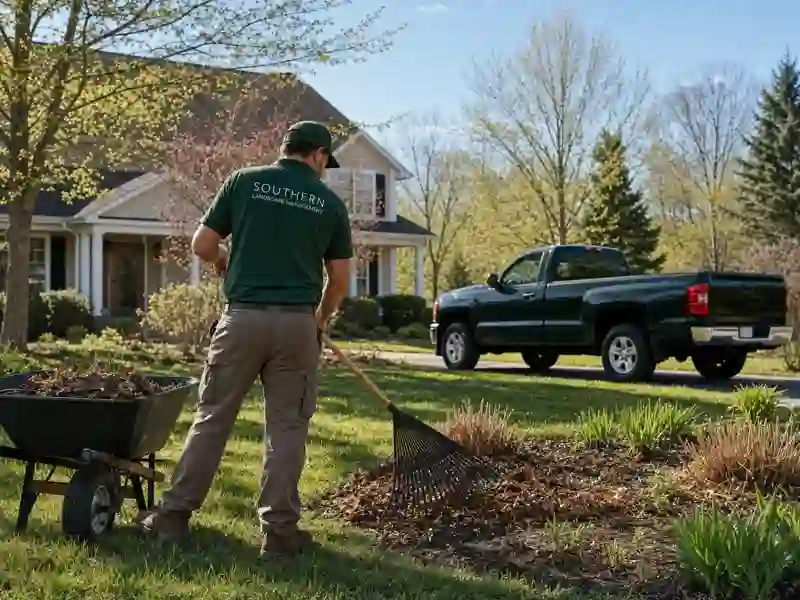
Ohio winters are hard on lawns. Freeze-thaw cycles, snow mold, salt damage near driveways and sidewalks, and the general stress of dormancy all take a toll. Spring is when you assess the damage and set the lawn up for a strong growing season.
Here's the checklist we use when evaluating and preparing Springboro lawns each spring.
Early Spring (March – Early April)
Assess Winter Damage
Walk the lawn and note any areas with matted, discolored, or dead grass. Snow mold appears as circular gray or pink patches. Salt damage shows up as brown streaks along driveways and sidewalks. Compaction damage is visible as thin, weak growth in high-traffic areas.
Document what you find — this informs what treatments are needed and where.
Rake and Dethatch
A light raking removes dead grass, breaks up matted areas, and allows air and light to reach the soil. If your lawn has more than half an inch of thatch — the layer of dead organic matter between the grass and soil — dethatching may be needed. Excessive thatch prevents water and nutrients from reaching roots.
Soil Test
If you haven't tested your soil in the past two or three years, spring is a good time. A basic soil test tells you pH and nutrient levels, which determines what fertilizer and amendments your lawn actually needs rather than what you guess it needs. Ohio State Extension offers soil testing services for Warren County residents.
Mid-Spring (April – Early May)
Apply Pre-Emergent Weed Control
Pre-emergent herbicides prevent crabgrass and other summer annual weeds from germinating. Timing is critical — pre-emergent needs to be applied before soil temperatures reach 55°F consistently, which in Springboro typically occurs in mid-April. Apply too late and it's ineffective.
Fertilize Appropriately
Spring fertilization should be moderate — enough to support healthy growth without pushing excessive top growth that stresses the plant. A slow-release nitrogen fertilizer applied in late April or early May is the right approach for most Ohio cool-season lawns.
Overseed Thin or Bare Areas
Thin areas that didn't recover from winter should be overseeded in spring. Use a Kentucky bluegrass or tall fescue blend appropriate for Ohio's climate. Rake the area lightly, apply seed at the recommended rate, and keep it consistently moist until germination.
Late Spring (May – June)
Adjust Mowing Height
Cool-season grasses like Kentucky bluegrass and tall fescue should be mowed at 3–4 inches. Taller grass shades the soil, reduces moisture loss, and crowds out weeds. Never remove more than one-third of the blade in a single mowing.
Begin Regular Watering
As temperatures rise, lawns need 1–1.5 inches of water per week. Deep, infrequent watering (two to three times per week rather than daily) encourages deeper root development and produces a more drought-tolerant lawn.
Monitor for Grubs and Other Pests
Japanese beetle grubs are the most common lawn pest in Warren County. They feed on grass roots in late spring and early summer. If you had significant grub damage last year, consider a preventive grub treatment applied in late May or June before eggs hatch.
Professional Spring Lawn Care in Springboro
Southern Landscape Management provides spring lawn care services for residential and commercial properties throughout Springboro, Centerville, Miamisburg, and Warren County. Our spring programs include assessment, pre-emergent application, fertilization, and overseeding as needed. Contact us for a free estimate.